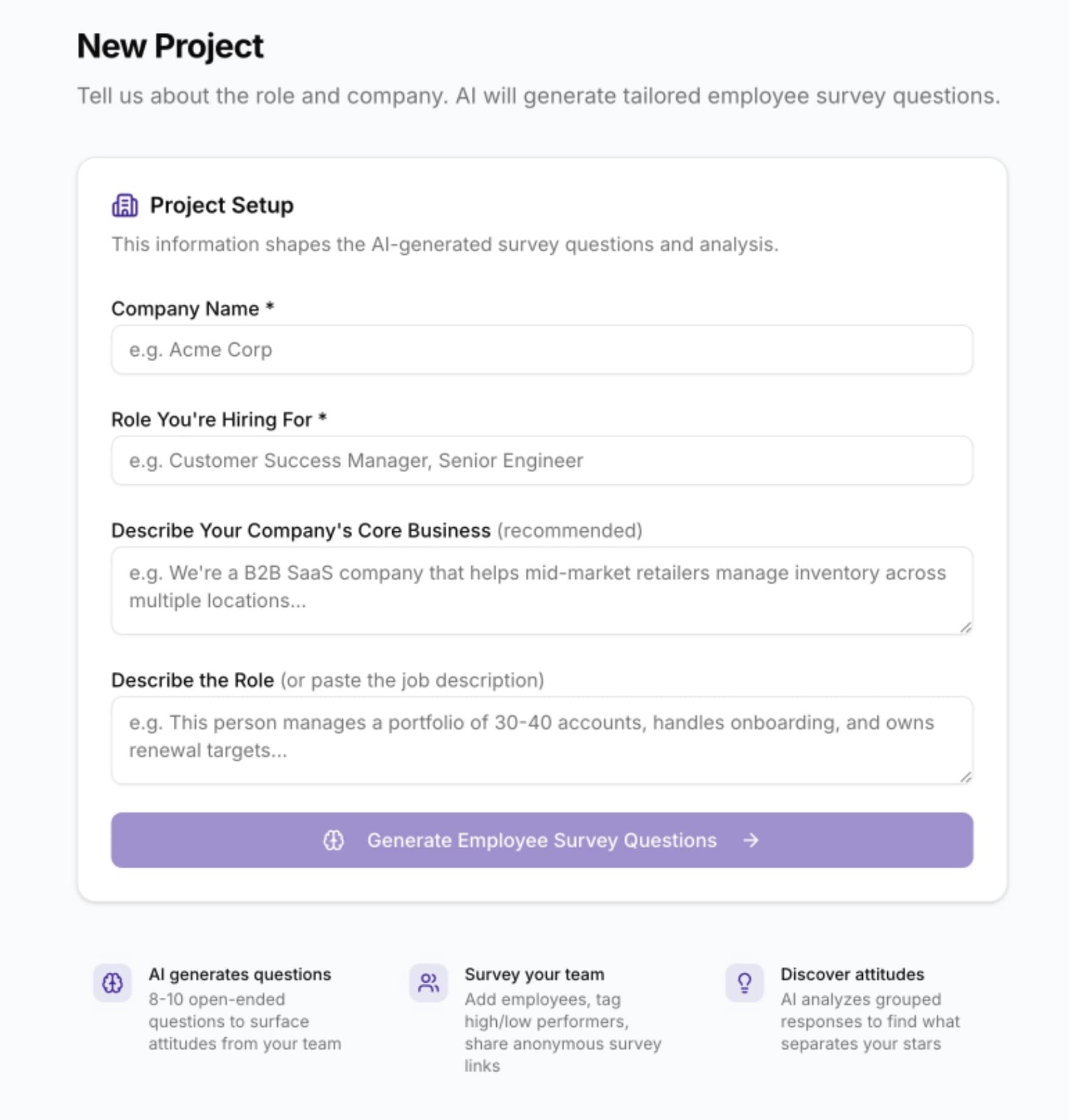
Tell us about the role. We write the survey.
Describe your company and the role you're hiring for. In seconds you get 8–10 open-ended questions, written to draw out how your people actually think. You review and edit every one before anything goes out.
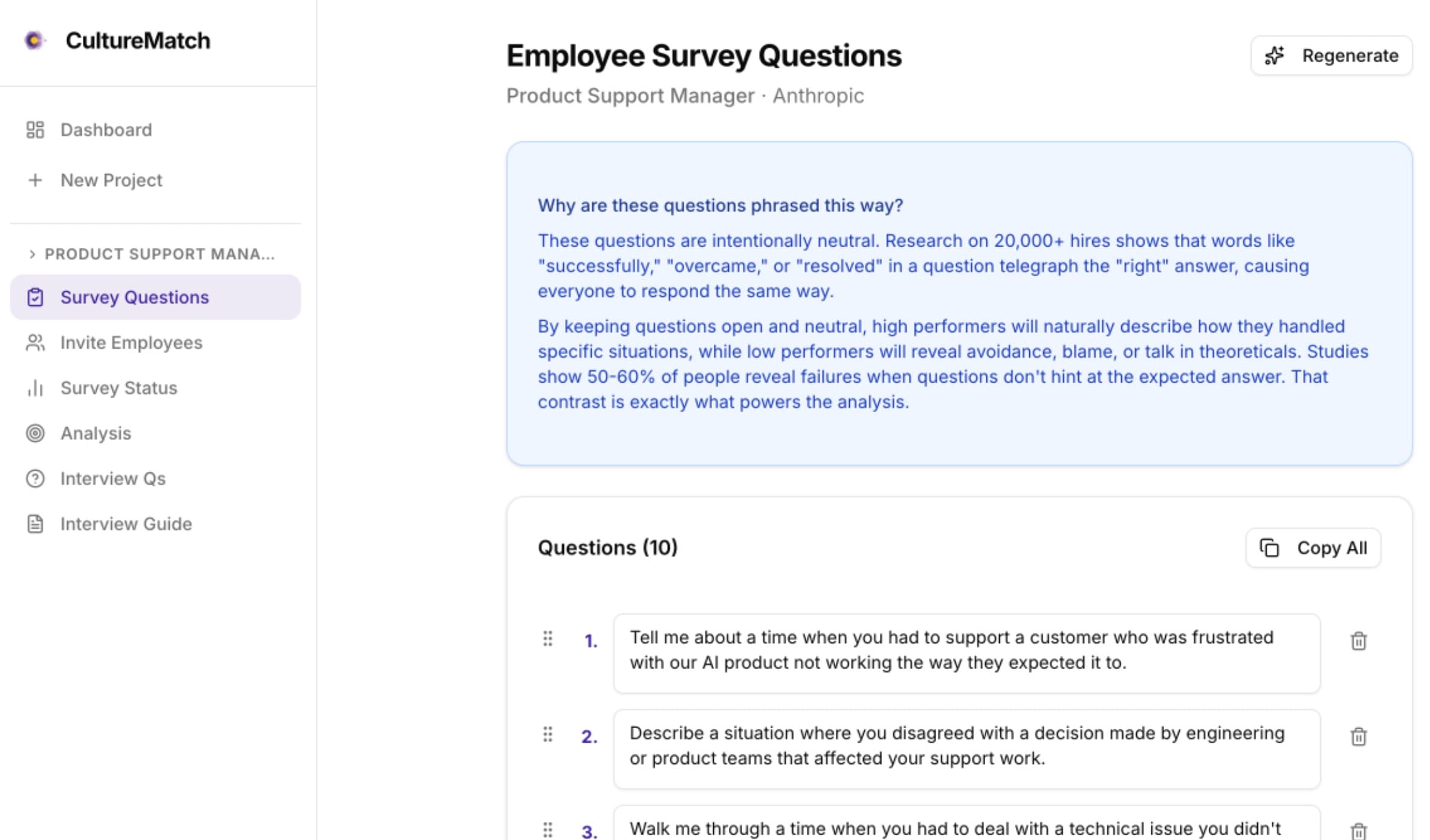
Why this matters
The questions are phrased neutrally, so A players and C players reveal themselves through how they answer, without anyone feeling like they're being tested.
Survey your team, anonymously.
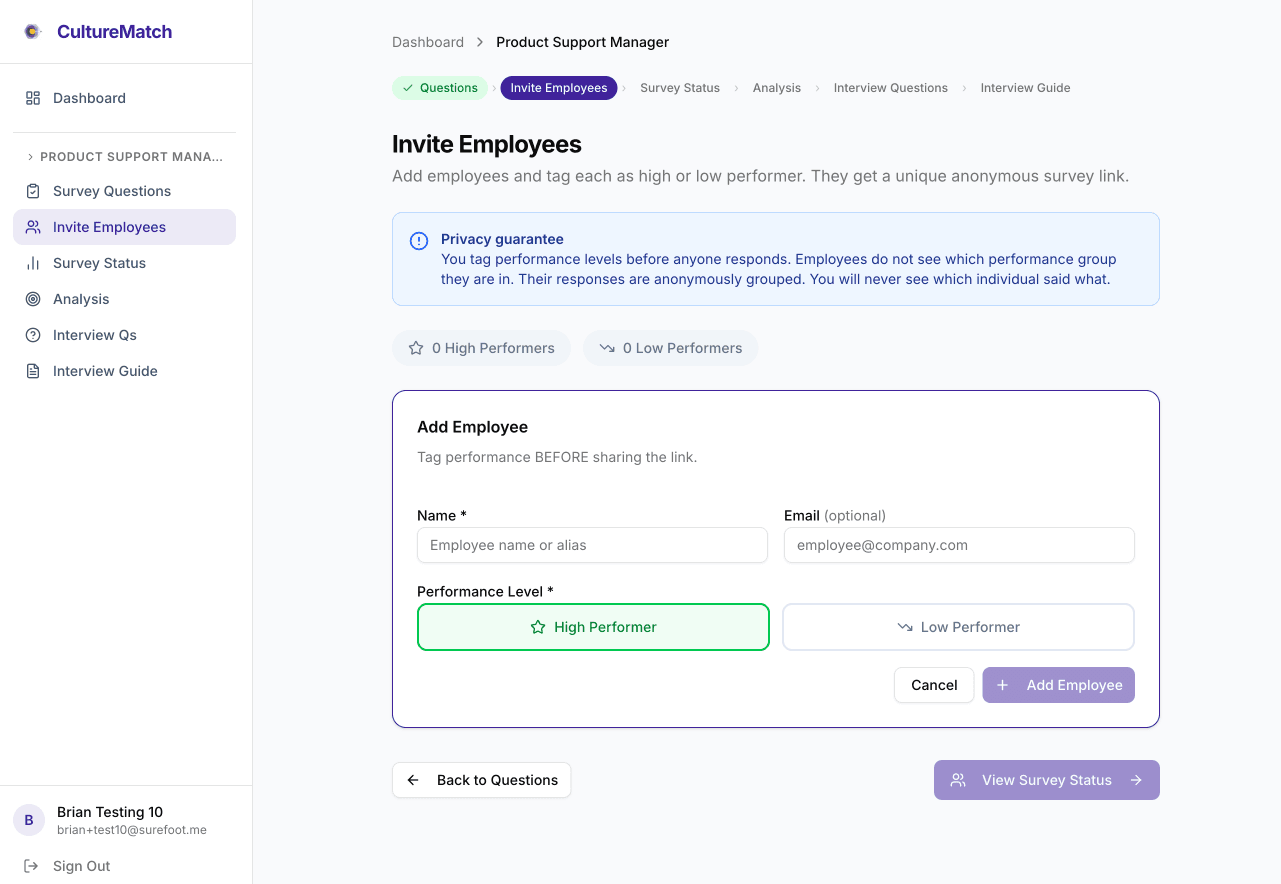
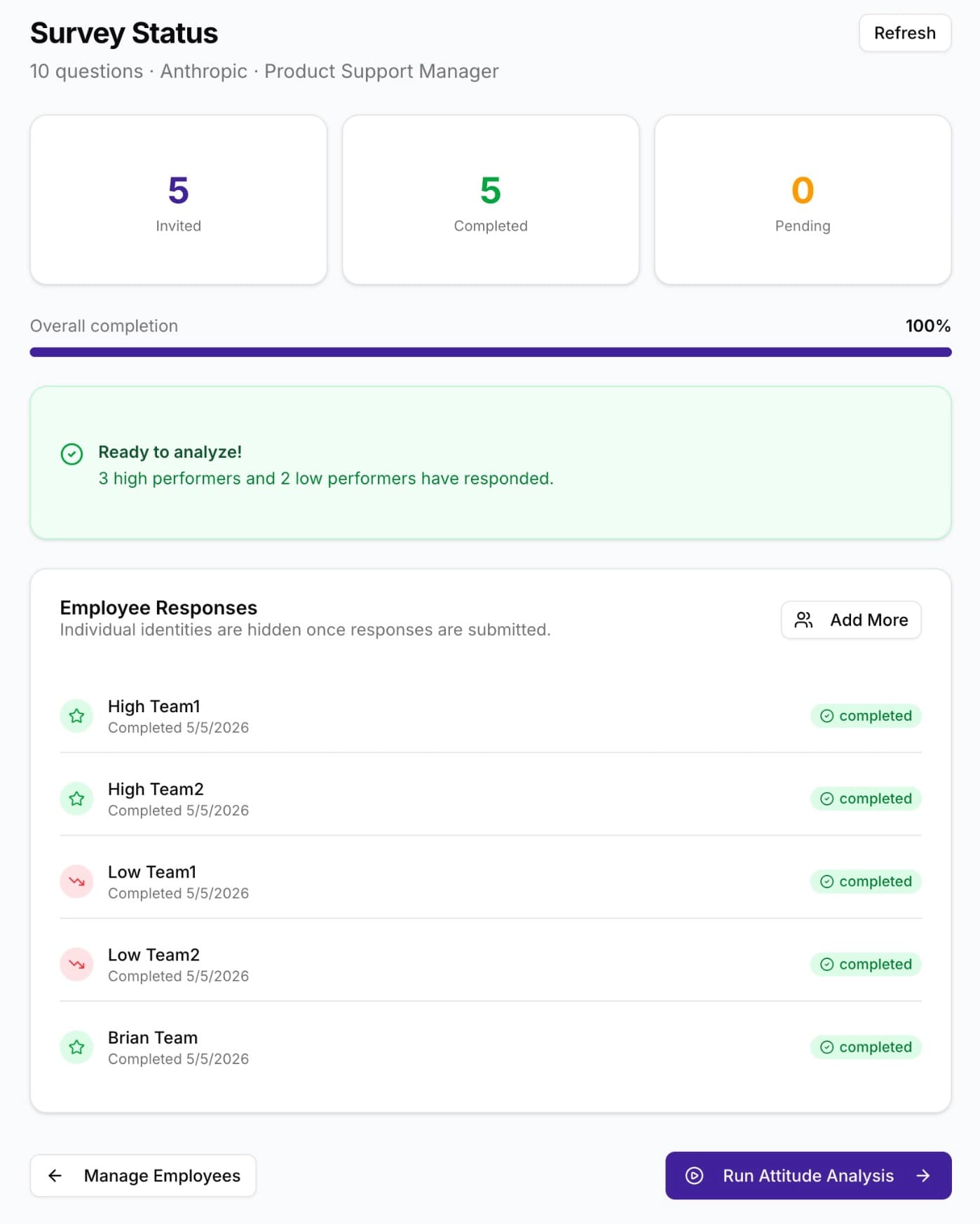
Add your employees and tag each as a A, B, or C player up front. Everyone gets a unique, anonymous link and answers on their phone in about 10–15 minutes. You tag performance once; after that, you never see who said what.
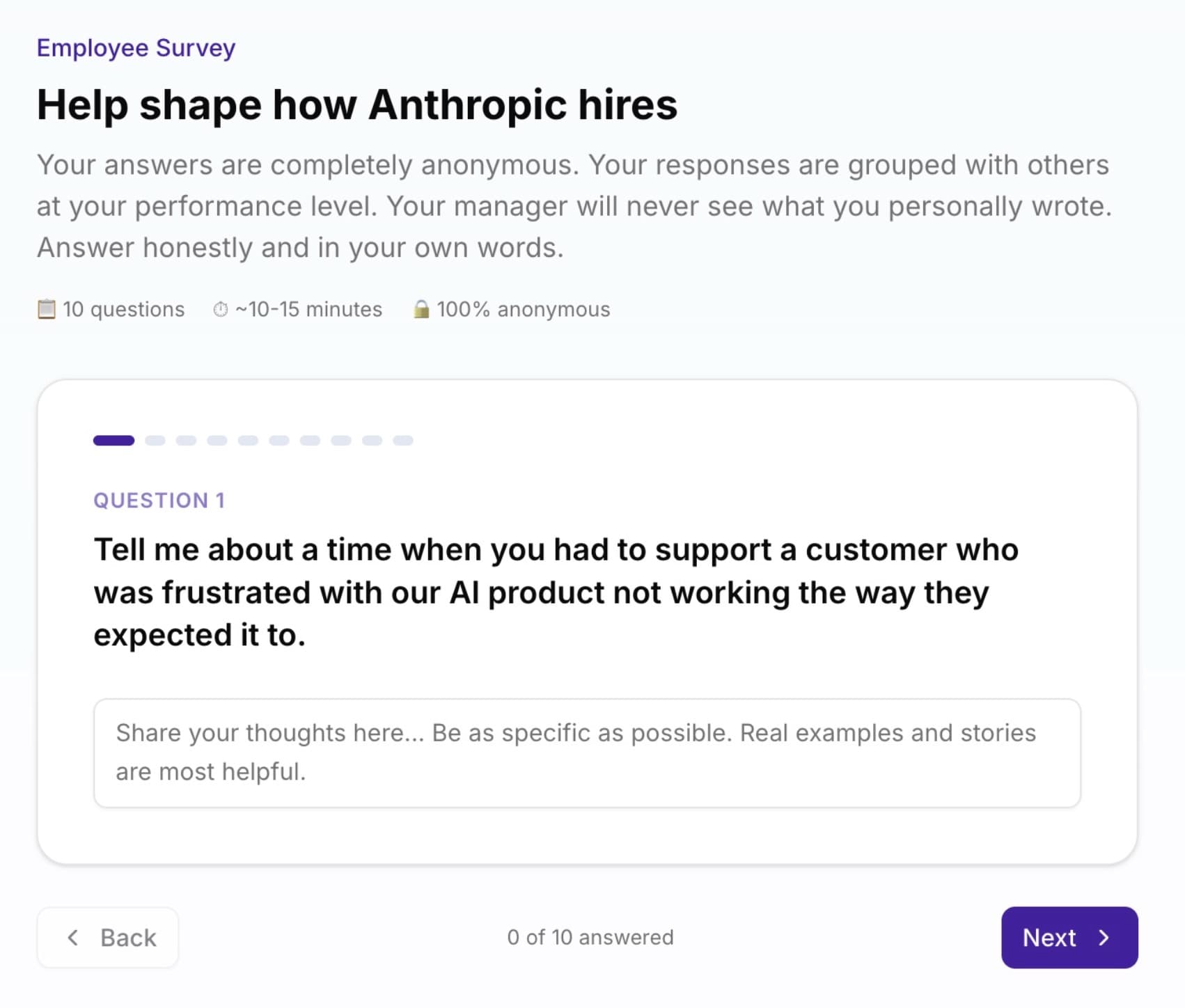
Anonymity at the data level
Because you can't link any answer to a person, employees speak honestly and the analysis stays free of manager bias.
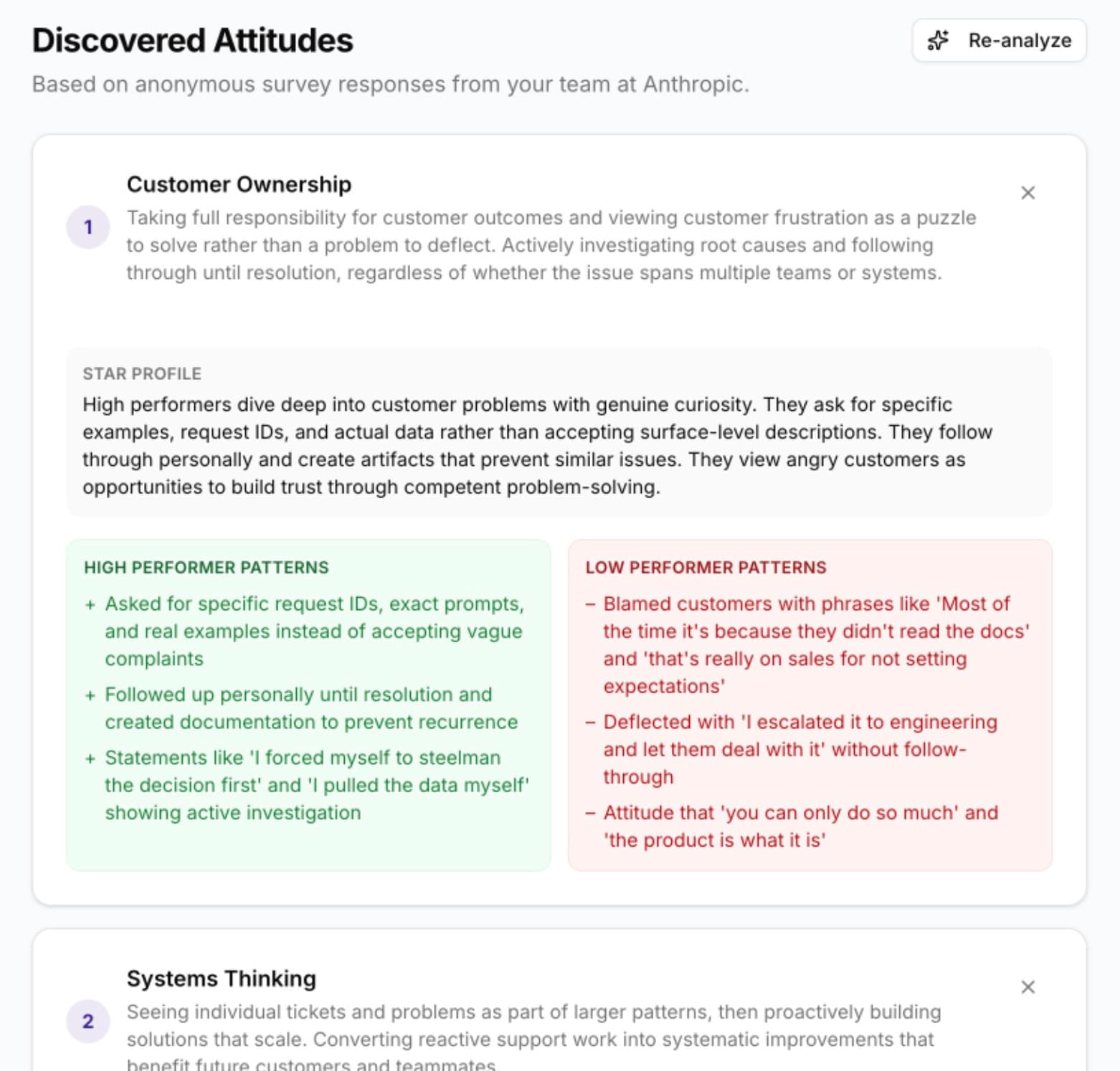
Discover the attitudes that separate your stars.
Track completion as responses come in. When you're ready, the analysis compares your A players against your B and C players, never individuals, and surfaces the 4–6 attitudes that actually set your best people apart.
Grounded in research
The analysis draws on the science behind structured, behavioral interviewing, the methods shown to predict on-the-job success far better than gut feel.
Walk away with your interview guide.
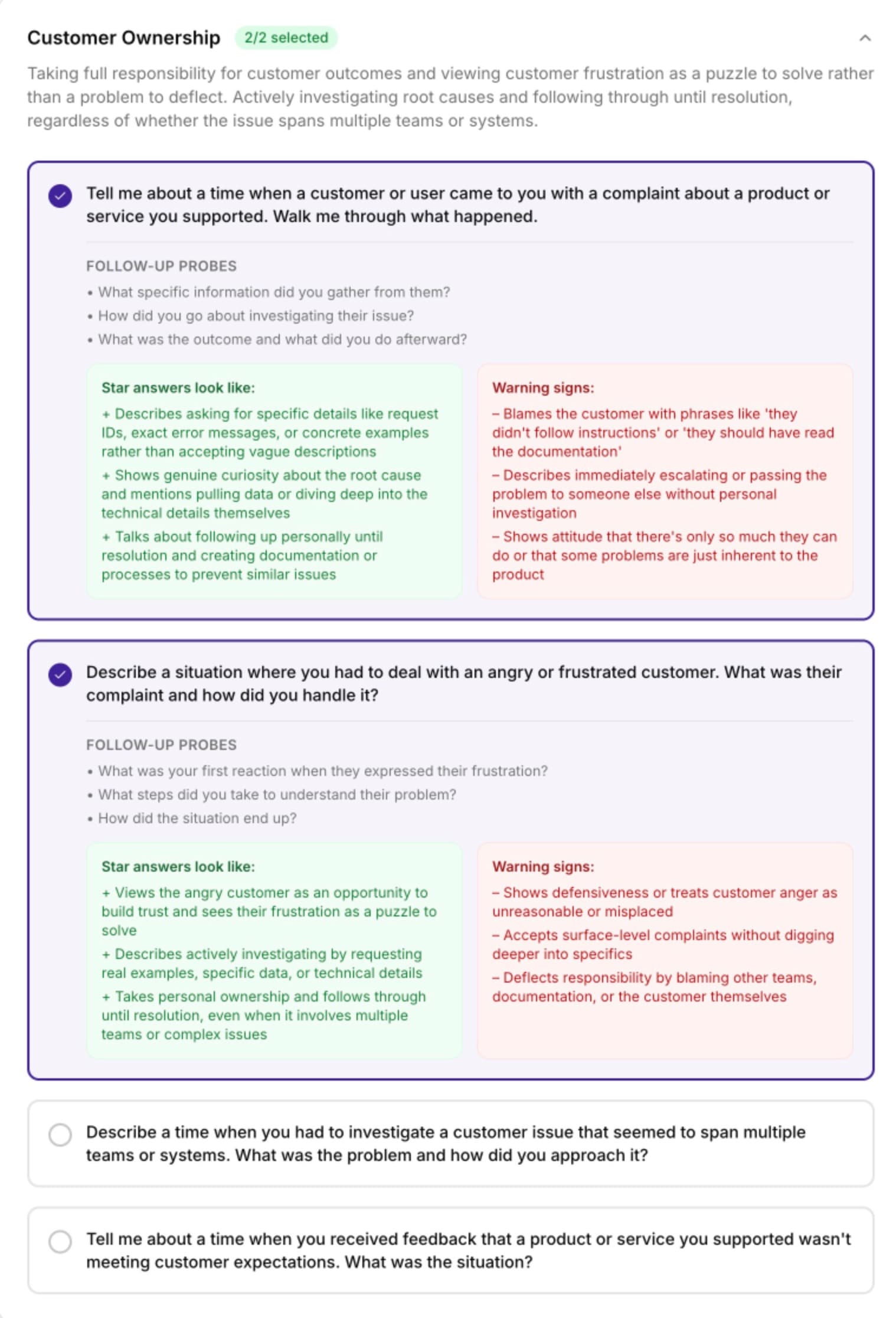
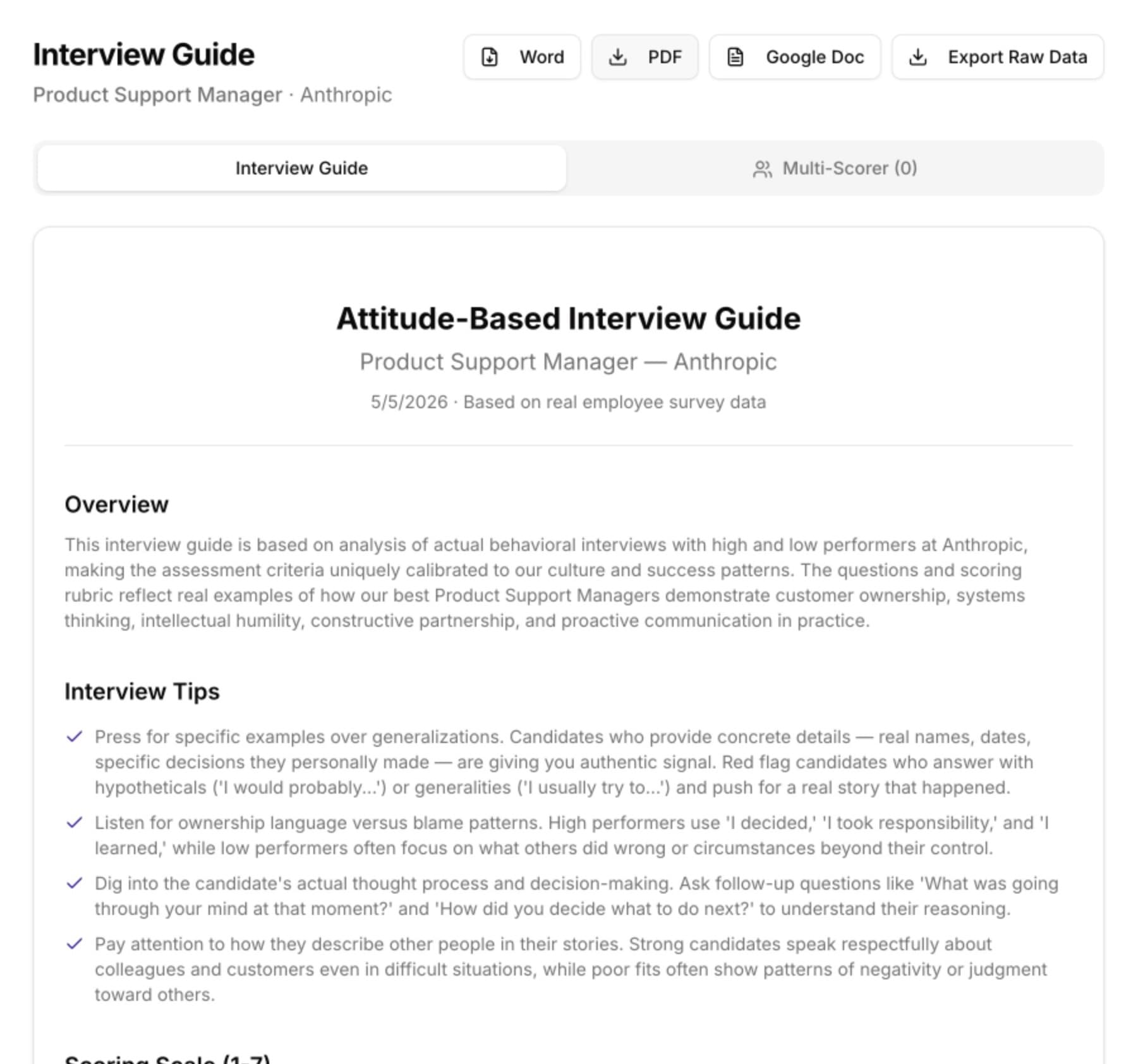
For each attitude, choose from behavioral interview questions, each paired with a scoring rubric grounded in your own data. Rehearsed and AI-scripted answers fall apart under follow-up probes built from what your real A players actually did. Export a print-ready guide and score every candidate against the same bar, as a team.
Use it for every hire
Once your guide exists, every interviewer asks the same grounded questions and scores against the same rubric, for this role, forever.
The key: anonymity at the data level
You tag performance levels before the survey starts. Once responses come in, you only see them grouped as “A Player Group” and “C Player Group”, never linked to an individual. Employees speak more honestly. Analysis is cleaner. Rubrics are grounded in what your actual best people sound like.
Removes manager bias
You can't cherry-pick or reinterpret responses when you don't know who said what.
Employees are more honest
People speak freely when their boss won't see their specific answers.
More defensible
Your hiring rubric is grounded in blind group data, not subjective judgment.
Questions people ask
How long does the whole thing take?+
Under an hour of your time. Questions generate in seconds, employees spend 10–15 minutes each on the survey, and the analysis takes about 30 seconds once responses are in.
Do my employees know who's tagged high or low?+
No. You tag performance privately, before the survey goes out. Responses are only ever shown grouped, never tied to a name, so people answer honestly.
What if I don't have many employees to survey?+
Even a handful of A players and C players produces useful contrast. The more responses you gather, the sharper the attitudes that emerge, but you don't need a big team to start.
Can I edit the questions the system generates?+
Yes. Every survey question and every interview question is yours to review, reword, or remove before it's used.
What do I actually walk away with?+
A print-ready interview guide: behavioral questions organized by the attitudes that predict success at your company, each with a scoring rubric your whole team can use.